Wednesday, September 14, 2011

Work911 Ezine - BARS Rating Scales, Reducing Conflict, and more


WORK911: LEARN WITH US.
Latest NewsSep 14, 2011

Are Behaviorally Anchored Rating Scales Superior To More General Approaches?

A short discussion of whether BARS (Behaviourally Anchored Rating Systems are better than other systems. Bottom line: Ratings are still ratings.

Read more...TwitterFacebookLinkedin

Authentic Leadership Can Be Bad Leadership - Deborah Gruenfeld and Lauren Zander - Harvard Business Review

Most people can agree that authenticity is of great value. We'd rather be — or follow — a leader who is for real than one who is faking it. Acting in a way that feels truthful, candid, and connected to who you really are is important, and is a leadership quality worth aspiring to. On the other hand, being who you are and saying what you think can be highly problematic if the real you is a jerk. In practice, we've observed that placing value on being authentic has become an excuse for bad behavior among executives. It's important to realize that what makes you you is not just the good stuff — your values, aspirations and dreams; the qualities others love most. For most people, what comes naturally can also get pretty nasty. When you are overly critical, non-communicative, crass, judgmental, or rigid, you are probably at your most real — but you are not at your best. In fact, it is often these most authentic parts of a leader that need the most management. ...

Read more...TwitterFacebookLinkedin

Behaviorally Anchored Rating Scales for the Assessment of Tactical Thinking Mental Model

The military is often in a leadership position regarding evaluation and development of "employees". In this adobe acrobat file, you'll find a research report on the use of BARS in assessing tactical ...

Read more...TwitterFacebookLinkedin

Featured Free Resource

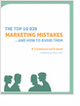
The Top 10 B2B Marketing Mistakes...And How to Avoid Them

A crowd-sourced eBook lead by Dianna Huff and Mac McIntosh. They asked their respective networks to submit the top ten B2B marketing mistakes they see other marketers making. From email to social media, people expressed their opinions – and often quite passionately!

Blended Learning Systems: Definition, Current Trends, and Future Directions

So what is this %u201Cblended learning that everyone is talking about? This chapter will provide a basic introduction to blended learning systems and share some trends and issues that are highly relevant to those who are implementing such systems. To accomplish these goals, the chapter will address five important questions related to blended learning systems such as: What is blended learning?, Why blend? This is a scholarly type ...

Read more...TwitterFacebookLinkedin

Cognitive Science (Stanford Encyclopedia of Philosophy)

Cognitive science is the interdisciplinary study of mind and intelligence, embracing philosophy, psychology, artificial intelligence, neuroscience, linguistics, and anthropology. Its intellectual origins are in the mid-1950s when researchers in several fields began to develop theories of mind based on complex representations and computational procedures. Its organizational origins are in the mid-1970s when the Cognitive Science Society was formed and the journal Cognitive Science began. Since then, more than seventy universities in North America, Europe, Asia, and Australia have established cognitive science programs, and many others have instituted courses in cognitive ...

Read more...TwitterFacebookLinkedin

Conflict Prevention In The Workplace: Using Cooperative Communication [Download&91;

Conflict Prevention In The Workplace: Using Cooperative Communication [Download&91;

Conflict Prevention In The Workplace - Using Cooperative Communication

Just like cholesterol there's good conflict and bad conflict. If you can prevent the bad, unnecessary conflict, you can save huge amounts of time, and pain associated with the "bad" stuff!? ...

Read more...TwitterFacebookLinkedin

Featured Free Resource

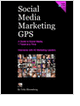
Social Media Marketing GPS -- Free 91 Page eBook

SMGPS will tell you the why & how to use social media for marketing, 1 tweet at a time. You'll learn essentials in digestible little spoonfuls.

Customer Service Advocacy Gone Insane: Propaganda For Your Childen
Customer Service Advocacy Gone Insane: Propaganda For Your Childen In one of the strangest things ever in customer service, Sitel releases a children's book targeted to the 2-8 age range, to "teach" them how important call center representatives are. And Tennesse Governor Haslam wrote the forward endorsing the book. AND, not a critical peep. NOT ... 

Read more...TwitterFacebookLinkedin

Customer Service Questions and Answers From Employees On The Firing Line>
Are you on the firing line dealing with customers? Here's some ideas on how to work more effectively.(20-Jul-2011) 

Read more...TwitterFacebookLinkedin

Customer Service and Customer Experience Knowledge Base - Main Page - General Customer Service Skill Questions>
Several hundred answers to frequently asked questions about customer service, why it's so terrible, and what to do about it.(20-Jul-2011) 

Read more...TwitterFacebookLinkedin

You are receiving this newsletter because you opted-in to receive relevant communications from Bacal & Associates 

Bacal , 722 St. Isidore Rd.
Contact: ceo@work911.com


--
You received this message because you are subscribed to the Google Groups "Work911 Ezine" group.
To unsubscribe from this group, send email to Work911-Ezine-unsubscribe@googlegroups.com
For more options, visit this group at http://groups.google.com/group/Work911-Ezine

Wednesday, September 7, 2011

Learn With Us: Work911.com 09/07/2011

Thanks for your interest in the Work911 Newsletter, published twice weekly, and containing news, free articles, discounts, and much more on management, customer service, leadership, communication and conflict and career success.  Is this email not displaying correctly?
View it in your browser.
Bacal & Associates

Work911 Newsletter: Learn With Us

Sep 06, 2011 07:25 pm | Chris Meyer & Julia Kirby

Capitalism Is Not "Doomed"

One of The Economist's weekly cartoons showed a bazaar full of T-shirts, mugs, and banners emblazoned with the slogan "Capitalism Is Dead!" A stockbroker surveys the many customers buying this sentiment in its many forms and remarks, "I think I've found a growth market!"

That was in October of 2008. But recent volatility in the financial markets seems to have a renewed an appetite for the idea. So Nouriel Roubini's recent op-ed, "Is Capitalism Doomed?" isn't as late to the market as it first appears.

The question of capitalism's demise may be arresting, but it's not helpful, in part because if the answer were "yes" no one would know what to say. What would replace it? "Capitalism is dead, yes, and the future is all about populism/mercantilism/barter/Linden Dollars/computer-optimized central planning?" Maybe not.

Comments like Roubini's (and, for the record, we subscribe to the policy prescription he outlines in that post) imply that capitalism is some fixed set of rules and precepts that, never changing, will either work or collectively collapse. And the rules that Roubini and others identify did work brilliantly for a long time. They fear that the upheaval of the past few years will explode this stable — or frozen — way of doing the world's business.

Here's a different — and we think more useful — point of view: "How will capitalism evolve in its new environment?"

What happens when we think about capitalism as a system, a set of rules that govern the behavior of decision makers, individual or institutional? When rules work well, they become widely distributed; when they are harmful, they leave the system. For example, the rules governing limited liability corporations worked well to provide the capital needed for the industrial revolution with its large scale financing requirements, so debtors prisons died off. It's a mirror of biological selection, in which, for example, the gene for sickle cell anemia is present in populations where malaria is common, but dies out in cooler, drier climates.

Globalization has spread the rules of what we might call "advanced economy capitalism" (that Roubini & co. identify with) to places to which they are poorly adapted. Capitalism's home has moved from high-income, low-growth, aging societies where capital is so abundant banks use it to play games to the reverse: emerging markets with youthful populations, rapid growth, and low incomes, which need to invest capital in human and physical infrastructure. Societies with urgent agendas and abundant opportunities to improve the health, education, and welfare of their citizens will resist handing control of their economies to forces whose only interest is financial gain. So capitalism is bound to change.

An example of this shift occurred in the late 1990s, during the "Asian Contagion" of currency collapses, when Mahathir bin Muhammed, Prime Minister of Malaysia, suspended the conversion of the Malay currency. The IMF and other financial players were incensed at this crime against capitalism, because Malaysia closed their favorite blackjack game — the one where they both placed the bets and dealt the cards by selling so much of a currency that they ensured the collapse, almost risk-free. Mahathir stood his ground, preferring to protect the economic health of his country to defending principles of free trade at enormous civil cost. Two years later, as Malaysia boomed, the IMF apologized for criticizing Mahathir. Mahathir replaced one of the rules of advanced capitalism — prioritize the financial players over the population — with an alternative. As power flows from G7 countries to more Malay-minded countries, the mutation could become the norm.

So the question becomes not whether capitalism is doomed, but rather how it will evolve away from its current form toward one more fit for a global economy. Reform of the financial industry is a necessary step because, in Roubini's terms the "financial system run amok" is at the root of the problem and financial institutions and even regulators are not incented to fix it. Europe should continue pressing its banks to participate in writing down sovereign debt, as the US should push its banks to write down mortgages. But most importantly, the financial industry must not be allowed to inhibit the evolution of capitalism. As it moves from the swamp, the sickle cell anemia gene does more harm than good.

Read More
share on Twitter Like Capitalism Is Not "Doomed" on Facebook

Sep 06, 2011 07:14 pm | Ron Ashkenas

Embrace Your Irrational Colleagues

Have you ever wondered why perfectly sensible, rational, and intelligent colleagues resist or reject perfectly sensible, rational, and intelligent ideas? Obviously it's not because they are stupid. There is just something going on that we don't realize.

Here's a quick example: A large, over-crowded urban hospital was trying to free up beds by reducing unnecessarily long patient stays. To that end, an analysis showed that one particular floor never seemed to discharge patients over the weekend. When the nursing and administrative team was asked about this data, the head nurse insisted that she would not support any attempts to increase weekend discharges, saying only that it wasn't a good time for patients to leave the hospital. Clearly, on the surface, her position made no sense. Eventually, she shared the fact that several years earlier a few patients had lost valuables during weekend discharges. So, to insure their security, the head nurse made sure that patients' personal items could only be unlocked from the safe in her presence (she had the only key) — and she didn't work on weekends!

It's easy to laugh at a story like this one. But the reality is that the nurse was doing what she thought best, which made her appear irrational to others. Once the underlying history and motivation was revealed, her behavior made sense. It then prompted a review not only of the discharge procedures, but also of how best to secure personal property.

Irrational behavior is part of the human condition. There's a long list of things that we know we should avoid, but do them anyway; and an equally long list of things that we know are good for us but that we avoid. That's why people smoke cigarettes, drive after having a few cocktails, or don't floss their teeth. At some level, conscious or unconscious, each of us has a compelling reason — such as short-term gratification, peer acceptance, convenience, lifestyle, and many more — for doing the "wrong" thing.

Organizations of course are composed of people, all of whom act irrationally at various times and seemingly do the "wrong" things. So it's no wonder that we often run into a colleague, boss, or subordinate who just can't seem to consider a completely reasonable suggestion. If you find yourself in this situation, here are two simple and "rational" guidelines to keep in mind:

  1. Don't try to fight irrationality with rationality. It will only make you more frustrated and the other person more defensive. No matter how many well-constructed arguments you offer, you won't make headway until you understand the underlying motivation that is driving the other person.
  2. Focus on discovering, understanding, and embracing the other person's rationale. Even if your adversary is being driven by unconscious motivations, it's important to try to figure them out. Resistance to apparent logic always comes from somewhere, and you won't be able to breakthrough until you understand the reason. For example, sales people often resist logical and straightforward sales-model changes because they fear that compensation will be affected, or that customer relationships will be harmed. Until you understand and deal with those underlying issues it's difficult to make headway.

Years ago a senior executive told me that managing an organization would be a lot easier if there weren't any people involved. On the other hand, it wouldn't be nearly as interesting.


What's your experience with understanding — and embracing — irrationality in your organization?

Read More
share on Twitter Like Embrace Your Irrational Colleagues on Facebook

Sep 06, 2011 07:17 pm | Video

How Teddy Bears Can Make Your Company More Ethical


Sreedhari Desai, assistant professor at the UNC Kenan-Flagler Business School, explains why childhood cues could improve employee behavior. Her research is featured in the HBR article Adults Behave Better When Teddy Bears Are in the Room.
Read More
share on Twitter Like How Teddy Bears Can Make Your Company More Ethical on Facebook

Sep 06, 2011 08:24 pm | Anonymous

Leaders Who Refuse To Lead - Common Managerial Mistake Series

Leaders Who Refuse To Lead - Common Managerial Mistake Series When managers or formal leaders refuse to take on the responsibilities of leadership, some very nasty things can happen to organizations.
Read More
share on Twitter Like Leaders Who Refuse To Lead - Common Managerial Mistake Series on Facebook

Sep 06, 2011 08:24 pm | Anonymous

Performance Appraisal Goofs - Common Managerial Mistakes Series

Performance Appraisal Goofs - Common Managerial Mistakes Series In this column we look at perhaps the area where managers make the most mistakes--in performance appraisals.
Read More
share on Twitter Like Performance Appraisal Goofs - Common Managerial Mistakes Series on Facebook

Sep 06, 2011 08:24 pm | Anonymous

Reasons Managers and Business Decision Makers MUST Understand Basics of Research: Stop Bandwagon Jumping With These Eight Steps

Reasons Managers and Business Decision Makers MUST Understand Basics of Research: Stop Bandwagon Jumping With These Eight Steps There's so much bad information, pseudo-science research and much of it is repeated endlessly in blogs and in social media. Don't get diverted from what works to what is a fad. In this article we explain the problem, and suggest 8 steps all business decision makers should take. And, for that matter, any intelligent thinking person.
Read More
share on Twitter Like Reasons Managers and Business Decision Makers MUST Understand Basics of Research: Stop Bandwagon Jumping With These Eight Steps on Facebook

In This Issue

Recent Stories

Google+ For Customer Service? Things You Should Know Before Jumping In
Conflict Prevention In The Workplace: Using Cooperative Communication [Download&91;
If It Wasn't For The Customers I'd Really Like This Job [E-book Download&91;
Welcome, Why PsychMyths, and A Disclaimer
What Are the Benefits of Performance Appraisals in the Retail Industry? | Small Business - Chron.com
Copyright © 2011 Bacal & Associates, All rights reserved.
You are receiving this because you have signed up for a Bacal & Associates Newsletter.

Our mailing address is:
Bacal & Associates
722 St. Isidore Rd
Ottawa, On K0A1M0

Add us to your address book
unsubscribe from this list | update subscription preferences 

Wednesday, August 24, 2011

Work911 Ezine Aug. 23, 2011 40% off Coupon, and Are YOU Being Bought and Sold On The Internet?

Aug. 23, 2011 New Store, Big Discounts, and Are You Being Bought and
Sold On The Internet

News:

We're still working on integrating our new newsletters with this
current one so stay tuned. The basic idea is that you will be able to
receive updates on new articles, free material, and discounts on a
more regular basis. For now, we'll continue with this format.

BIG News: Our New Online Store and Your Special Discount Code:

We've been busy making it easier for you to access our learning
material, books, and LearnBytes Helpcards, and our new store is now
online at http://bacalassociates.com

Over the next few weeks we'll be adding our product line -- material
to help you with conflict management, customer service, angry
customers, performance management and appraisal and much more.

To thank you for your loyalty and for subscribing to this newsletter,
we're offering you a special 40% discount on ALL our learning products
currently in our new store. The code to use to receive your discount
is bacal. There's a place to enter the discount code/coupon on the
right hand side of the shopping cart.

The code expires at the end of day on Friday, Aug. 26, so act now.

Any problems or comments about the new store? Email them to me,
directly at ceo@work911.com .

Feature Article:

Are You Being Bought & Sold On The Internet - Or, There's no such
thing as a free lunch

Millions of people use Google, Facebook, LinkedIn, Twitter and other
free services available on the Internet. These companies offer some
amazing functionality at a price everyone can afford -- nothing.
Unfortunately many consumers are not aware of the business models used
by these companies, and how customers are "paying" for these services
with their personal information and online behaviors. Privacy? It's
hard to find these days as these companies push the envelope. This
article helps you understand how YOU are being bought and sold by the
companies you use every day.

The Business Models - Selling You

If you have wondered how these companies can offer free services on a
massive scale, here's the simple answer. They sell advertising to
companies that want you to buy from them. In effect, YOU are the
product being sold to advertisers on Facebook, and similar platforms.
Ok. That's not new. You are no doubt familiar with the ads on Google
search results since they've been around for years. It's those ads
that allow Google to exist and make large amounts of money.

Facebook, Google, and similar companies BUY you and your personal
information by offering you free capabilities. You sign up. You
provide some level of information about yourself, your location, age,
gender, interests and so on. THAT information allows you to be sold to
advertisers and the ability to "Personalize" the ads you see. In terms
of the business model, the information you provide massively increases
the money advertisers are willing to pay because they can TARGET ads
to your demographics and information. YOUR information allows Internet
companies to reap huge profits -- in fact profits counted in billions
for Facebook and Google.

No problem, you figure, you'll just limit the personal information you
supply? You can do that. Of course the more restricted your
information, the less likely you can link up with people of similar
interests and location, so there's a cost. Still it's an option.
Except...

The Stealthy Part of Selling You

Have you noticed this? On Monday, you research and compare prices on a
new dining room suite. Using Google Search you check out a number of
stores, and then you decide you'll hold off on your purchase until
next year. On Wednesday, you need some citations for a paper you might
be writing on pumpkins, so back to Google you go. You search for
"pumpkins" and at the top, side and bottom of the results page, there
are ads. Some of those ads will pertain to your current search, but if
you pay attention, you'll also see ads related to dining room suites,
or furniture. Google "knows" (thinks it knows) what you want, and it
tries to get you to click on ads by showing you ads from your online
behavior and search actions from the past.

That may or may not suit you. After all, you don't want to see
furniture ads because they aren't relevant anymore. But the scary part
is that Google "knows" and uses your BEHAVIOR from the past to
increase the chances you will click on the ads.

Not only will this happen when you search Google, but your past
behavior will follow you around the web. These days, there are
millions of websites that finance their operations by displaying ads
coming from Google. If you search for furniture on the Monday, and on
Wednesday, want to buy a book on customer service, you might end up on
a site with Google ads displayed beside the book reviews. And guess
what you will see? Ads for furniture. So, if you visit any sites in
the Google "network" Google will customize what you see, whether you
want it to or not.

Google serves up "interest based ads" to you based on your behavior,
not just on the information you enter when you join its services. It's
stealthy. Can your opt out of that system? Actually you can, but I'll
bet you a) don't even know you are being tracked, b) didn't know you
could opt out, and c) can't figure out how to opt out anyway, since
Google doesn't really TELL you.

The Battle For Eyeballs and Info

The battle for information about you has escalated hugely over the
last eighteen months, and as a user, you probably are unaware of some
of the tactics used by companies to make use of your information, but
you'll be hearing more of it. Some of it has little effect on you,
personally, at least for now, but some of it does.

For example, there are some vicious lawsuits and tactics used by the
big players in the social media and Internet space. For example,
Google (real time search) indexes Twitter using Twitter data. Twitter
gets mad and cuts off Google, so Google has to remove real time search
from its service options so you can no longer use it. New patent
lawsuits are launched almost every day. Google is being investigated
by U.S. Congress for anti-trust violations and will be called upon to
explain itself to Congress in September. In Europe, cases against the
big players in the Internet space have resulted in multi-million
dollar judgments levied for various violations.

The profits from buying and selling you are so large that even multi-
million dollar penalties are not enough to discourage companies from
pushing the envelope by using your information and online behavior.

There's more. Ever try to delete your Facebook account? Got tired of
feeling your privacy was invaded, or perhaps just got tired of the
thing? It's like the roach motel ad; you can check in but you can't
check out (is there a song about that?). For a while it was near to
impossible to delete your account, and now, while you CAN do it,
you'll probably need to hunt around to find out how. (for more about
Facebook, at least from a rather negative point of view check out this
article on BusinessInsider:

http://www.businessinsider.com/10-reasons-to-delete-your-facebook-account-2010-5

Conclusion

You may or may not have concerns about your privacy and some of the
stealth techniques companies are using to compete with each other, and
get more and more information about your personal habits, interests.
It's a personal decision, and there is clearly value in using
Facebook, Google, and free services they provide. Perhaps the critical
takeaway is that most consumers just don't know how stealthy the
techniques are--the backroom tracking is largely invisible to end
users unless they pay attention. And they should. Whatever decisions
you make about how you use these free service, and how much you allow
yourself to be bought and sold, you SHOULD know it's happening. And,
it might be worthwhile to do some additional research on how your
favorite companies and services are using your data and tracking you.

--

Reminders:

Big Change In Reprint Policies For http://Work911.com

We have liberalized our reprint policies. In the past we've not
allowed people to make copies of our articles, and we've had a pay-for-
use policy in effect. It's all changed.

While the new policy is displayed on our main site at http://work911.com,
it also applies to all our customer service related articles on
http://customerservicezone.com. So, if you want to print out copies
and distribute to your colleagues and friends, you can now do so.

First what you can't do. We still cannot allow any of our articles to
appear on websites, or any place public on the Internet. There's a
good reason for that. Search engines have trouble figuring out which
"copy" of an article online is the original one, and that means that
if you were to use our material online, you might make it impossible
for us to attract visitors to our sites. And that means, we'd have to
close them all down. We have to eat too.

But the good news is you can print them, use them in seminars, forward
copies to colleagues and friends IN EMAIL. The only exception is for
commercial publications that charge for subscriptions or accept
advertising. So if you run BusinessWeek, sorry, but you have to pay
us.

One of the reasons writers write is they feel compelled to do so, and
that applies to me. However, most writers WANT people to read what
they produce, and that's one of the major reasons we've made it easier
to share our material.

As always, you CAN link to our articles, and you can use short
summaries along with the link.

All we ask is that if you do share (remember, NOT on the web in public
places, give us credit.

News - Our Leadership Center

We've decided to spin off our Leadership Center to its own domain. You
can now find it at the more convenient address: http://leadertoday.org
. Easy to remember. We have to update the article database and get rid
of bad links, so be patient. There's tons of great stuff on ALL
aspects of leadership, including a frequently asked questions area,
and a Leadership Library.

Back to us.

We need your help. We've shut down some of our sites already, though
they were sites we either didn't promote or didn't update, so you
really won't miss them. Whether we shut down our other sites later
this year will depend on whether we can increase our traffic.

You CAN help. I'm not asking you to donate money, or in fact, spend
any money although buying our products would help <grin>

All I ask of you is that if and when you make use of our sites, you
share the pages you like with your friends, twitter followers,
Facebook and LinkedIn contacts. We've tried to make that easy by
putting buttons on many pages so you can share with a click or two.

We need traffic to our sites, or we'll have to shut down more sites
this year.

--

Get Up To Speed On Social Media Via These Special (Free) Offers -
There's a lot more than social media resources here!

We've created some special pages on which you can find some great
reports, book chapters and other documents free of charge on social
media. In fact there are a lot of other topics available too, so go to
http://work911.com/wpap/socialmedia.htm . Other topics like small
business, and HR are available in our drop down menu under
"Whitepapers" which you will see when you arrive there.

-

Our Sites:

Just a quick summary of our sites that have information on the
following topics:

World's Best Search Engines: http://researchprofessional.org

Training and Development Resource Center:http://thetrainingworld.com

Free Learning Stuff: http://free2thee.com

Leadership Resource Center: http://leadertoday.org

Communication Resource Center: http://www.work911.com/communication/index.htm

Conflict (both workplace and family) http://conflict911.com

Business, Strategic and Personal Planning: http://www.work911.com/planningmaster/index.html

Performance Management & Appraisal: http://performance-appraisals.org

Customer Service: http://customerservicezone.com

Our Main Site: http://www.work911.com

Multi-Purpose Articles Database: http://www.articles911.com

To new subscribers: The work911 newsletter is published no more than
once a week and contains articles on all things work related, and
contains other work related resources, and updates about our sites,
and their contents. Past history indicates we publish about every ten
days. Subscribe at http://work911.com/newsletter.htm

Don't forget that you can access free, useable previews of over twenty
of our books and helpcards at:

http://bacalassociates.com

and that we continue to offer special freebie offers and discounts to
our newsletter subscribers!

--
You received this message because you are subscribed to the Google Groups "Work911 Ezine" group.
To unsubscribe from this group, send email to Work911-Ezine-unsubscribe@googlegroups.com
For more options, visit this group at http://groups.google.com/group/Work911-Ezine